25 days to fall in love
Fred and I continue our journey in the Burmese countryside. We continue to face a lot of difficulties but the smiles and kindness are starting to pierce my shell.
The Burmese are welcoming. Hundreds of times a day, we are shouted "Bye bye!" ". These are often the only English words known, so we take them as hello, goodbye, and the whole conversation in between.
But unfortunately for me (and you!) People are embarrassed in front of the camera. Perhaps in part because of their teeth.
Teeth
It must be said that the majority of men constantly chew on paan, a tobacco mixed with nuts and spices, and wrapped in leaves. In addition to giving them a buzz, it destroys their teeth and gives them a permanently red mouth. Even CNN says it's problem.
With Fred, however, we developed a technique: he makes them laugh while trying to speak Burmese, and I try to capture them at the right time. Seeing these smiles, we understand a little better our popularity with local women, who they hardly chew and therefore still have their beautiful teeth.

A frank smile!
Politics ... and genocide?
In Pyay, in the center of the country, we walk back (no pun intended) from the market. A young man on a motorbike approaches us to practice his English. We accept the invitation and we head to a cafe. I say coffee, but we sit on little plastic children's chairs on the sidewalk, almost in the street, and drink tea.
In short, he and his friends are so motivated to learn English that they meet every evening for a period when only this language is allowed. A student in mechanical engineering, "to please my parents", Aung Zin (or Adam of his chosen English name) rather wants to be an interpreter for the foreign journalists who come to him.
We talk a little bit about politics.
Before 2010, speaking less against the government of the day could send you to jail for 10 years. We still have to watch ourselves a bit today, but the fact that I can sit in public with you is a big step forward.
Only 4% of the country's population is Muslim, and for months the news has trickled out from one of the provinces to the west, where the majority are found. Some speak of genocide, while others say he should rather speak of "tensions" and "fights".
The reality is that for the past few months, more than 21 Rohingya, the affected population, fled to Bangladesh. And that 130 people are still deprived of the care necessary for their survival.
As he is a Muslim himself, I ask Adam the question. I am surprised that he replied that he had not heard of it. But above all that he told me that it would surprise him that it was true.
I will have the same answer every time I ask this question to the country. I imagine it's a mix between not being able to fully express your thoughts yet and the lack of independent news at the national level ...
Music
Day and night, everywhere you go, there seems to be music blaring. I say music but I should write cacophony instead. Do they have a different range? Because in my ear, singers distort every second note, even on recordings!
During several nights camping, even in the middle of the week, the music in the distance does not turn off until around 1 a.m. I sympathize with this Dutch tourist who got put in jail a few weeks ago. Tired of music until the dead of the night, he himself went to unplug the sound system. Unfortunately for him, it was a Buddhist religious ceremony. The police arrived and our man was put between four walls ... for three months!
I put on my caps.
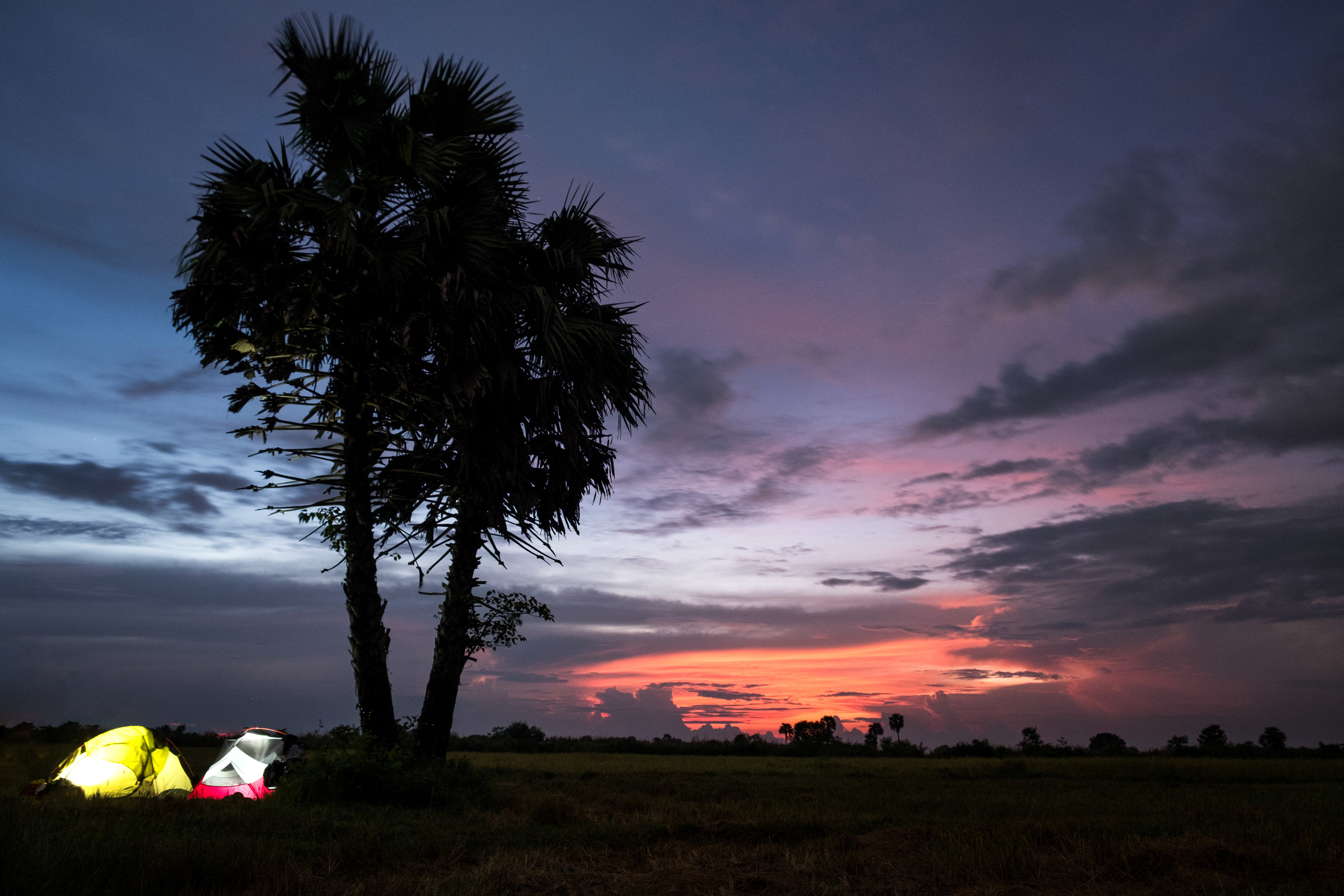
A little light for the photo, and then we hide.
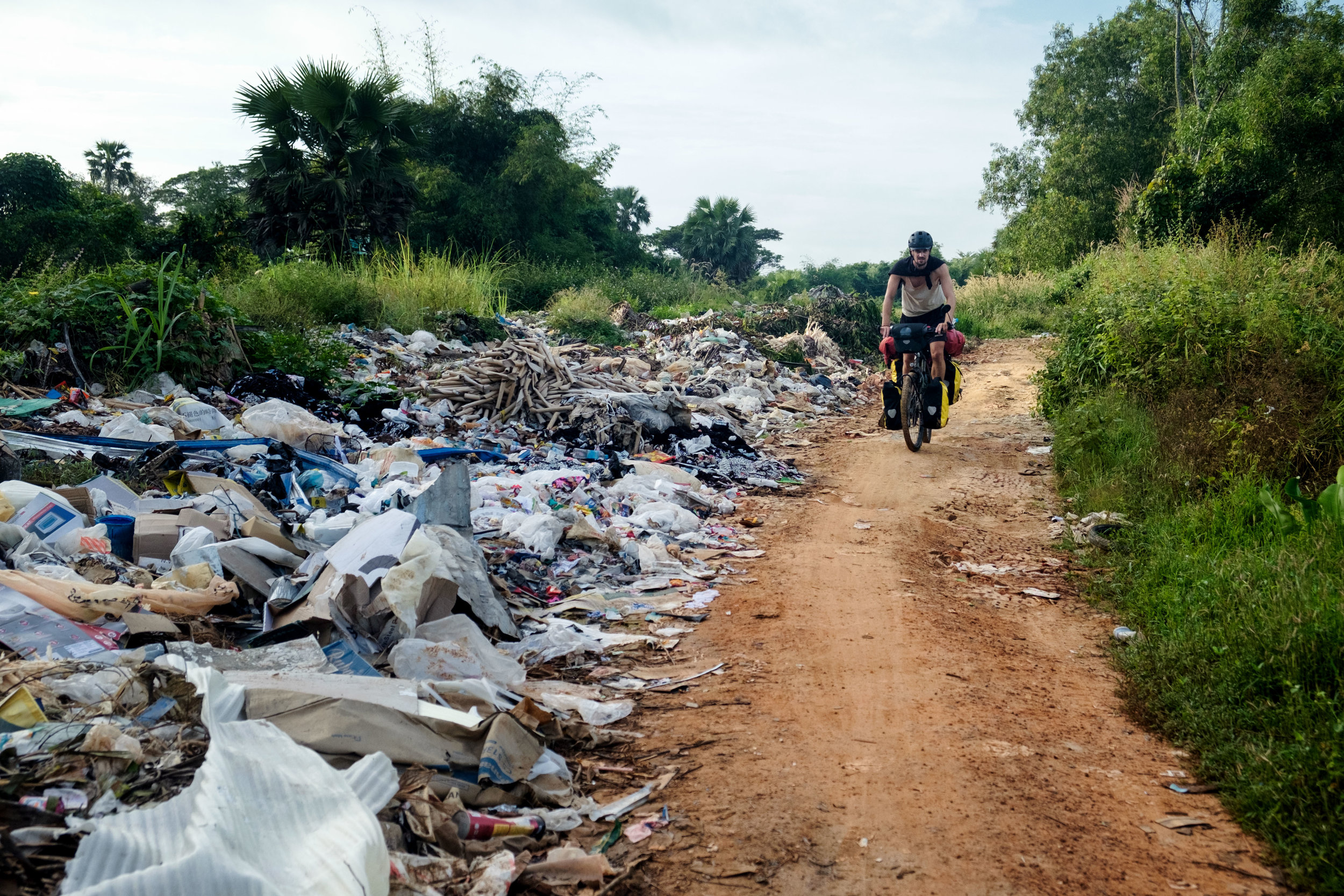
What the path between the road and our camp really looks like. Bucolic.
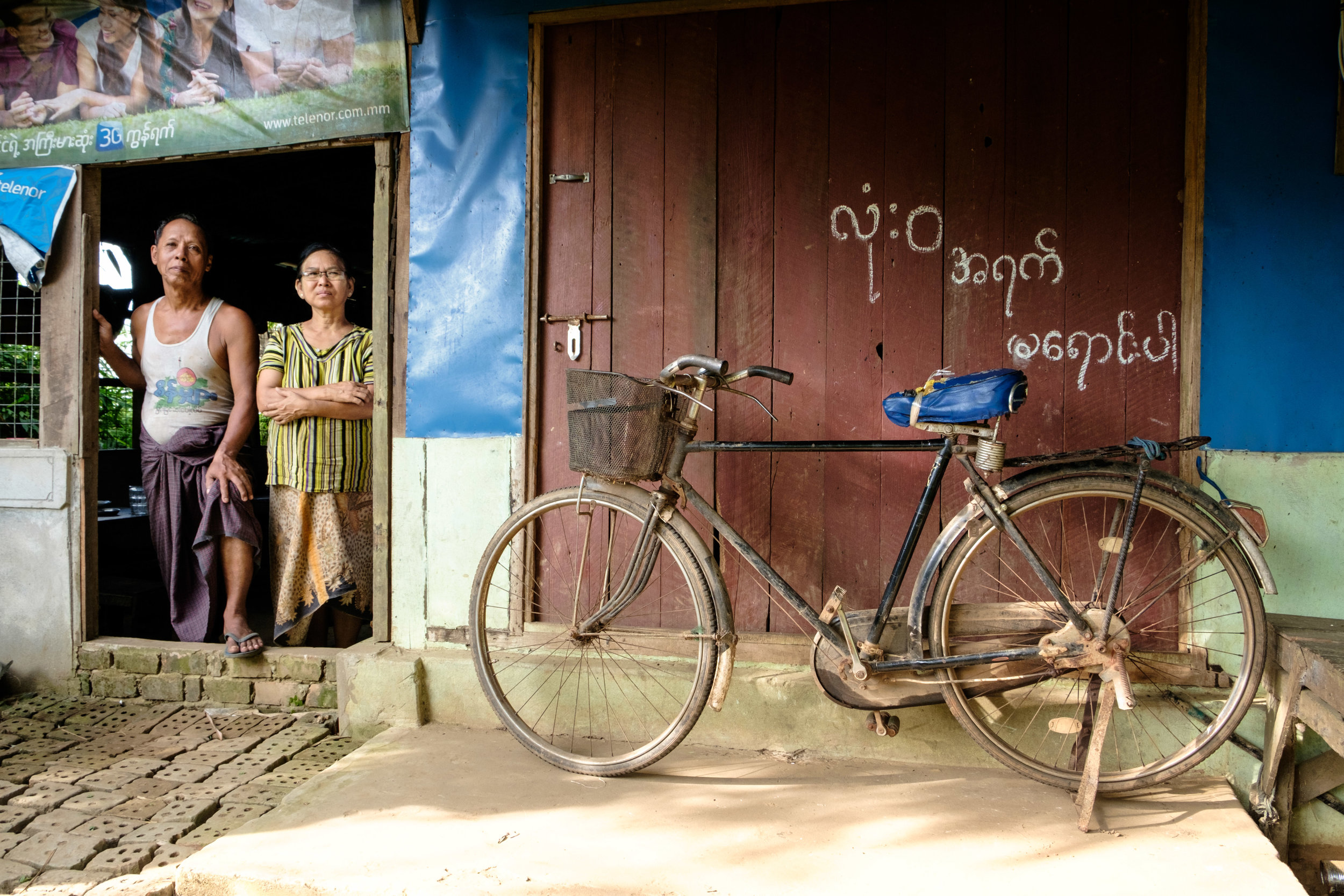
Charming afternoon invitation to this couple.
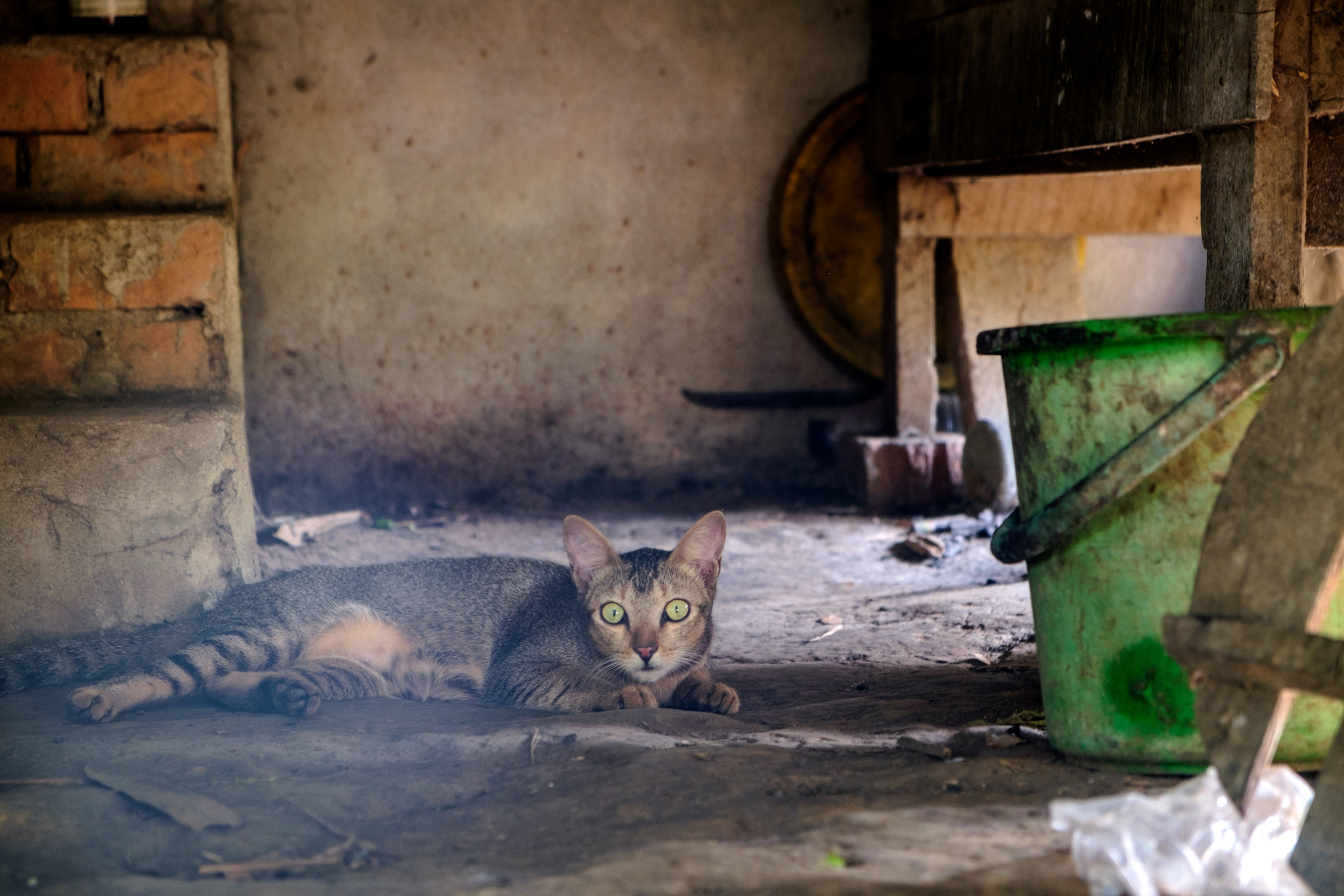
The family cat quite surprised by our visit to the house.
Work
We stop for a few days in Rangoon, the largest city in the country. Fred finds an English friend with whom he drove in Turkey, I am staying with Adrienne, a friend of a friend. I tell you about it in La Presse on December 31. The link will be on Facebook and in my Media section.
Shortly after getting back on the road, I complained a bit to Fred about the temperature and humidity. It was then that we passed a dozen men, each pulling a large cart of bricks. They are barefoot on the asphalt, pull like an ox, and their muscles are tight with the effort.
Fred looks at me with teasing eyes. “Are you still complaining now? ".
People are working hard here. We are surprised to see that the roads are quite good despite the fact that they seem to be built by hand. Tar is spread on the ground by a guy running with a pierced bucket. The liquid tar then flows down the road until its bucket is empty. Obviously, he is only in sandals ...
Women are also very involved in road works. They are often seen carrying wicker baskets containing gravel. Thousands of round trips are needed to fill the road and the shoulder. In reality, the only machine I see is the grader, stepping back over these rocks to even it out.
After a few weeks, we also notice that Thursday seems to be the day to burn waste. There is no widespread system for collecting garbage. Everyone takes care of their biggest. Riding on Thursday is therefore sometimes almost like going through a forest fire because the smoke is everywhere.

Very often along the road, we see the grain to be dried being spread or picked up.

Fishing until nightfall.
I've been driving in Burma for almost a month. As I approach Thailand, I am higher up, the humidity is less stifling, and there are fewer horns than in the north. I'm finally starting to appreciate all the big and small things this country has given me. The smiles, the meetings, the hello, the distractions of the head when we could easily have denounced my tent to the police.
I realize I haven't had hot water since arriving in the country, but in this heat, I hadn't even thought about it before. The majority of Burmese don't even have access to a shower anyway. We even saw people in town washing outside with a bucket.
On this beautiful road of small valleys, I am finally happy to have come here and to have persisted in knowing this country. Burma, I will miss you.